May 27, 2026•6 min read•
Why Japanese Food Terms Resist Direct Translation
Much of the terminology surrounding Japanese cuisine carries cultural ideas that are difficult to preserve in translation.
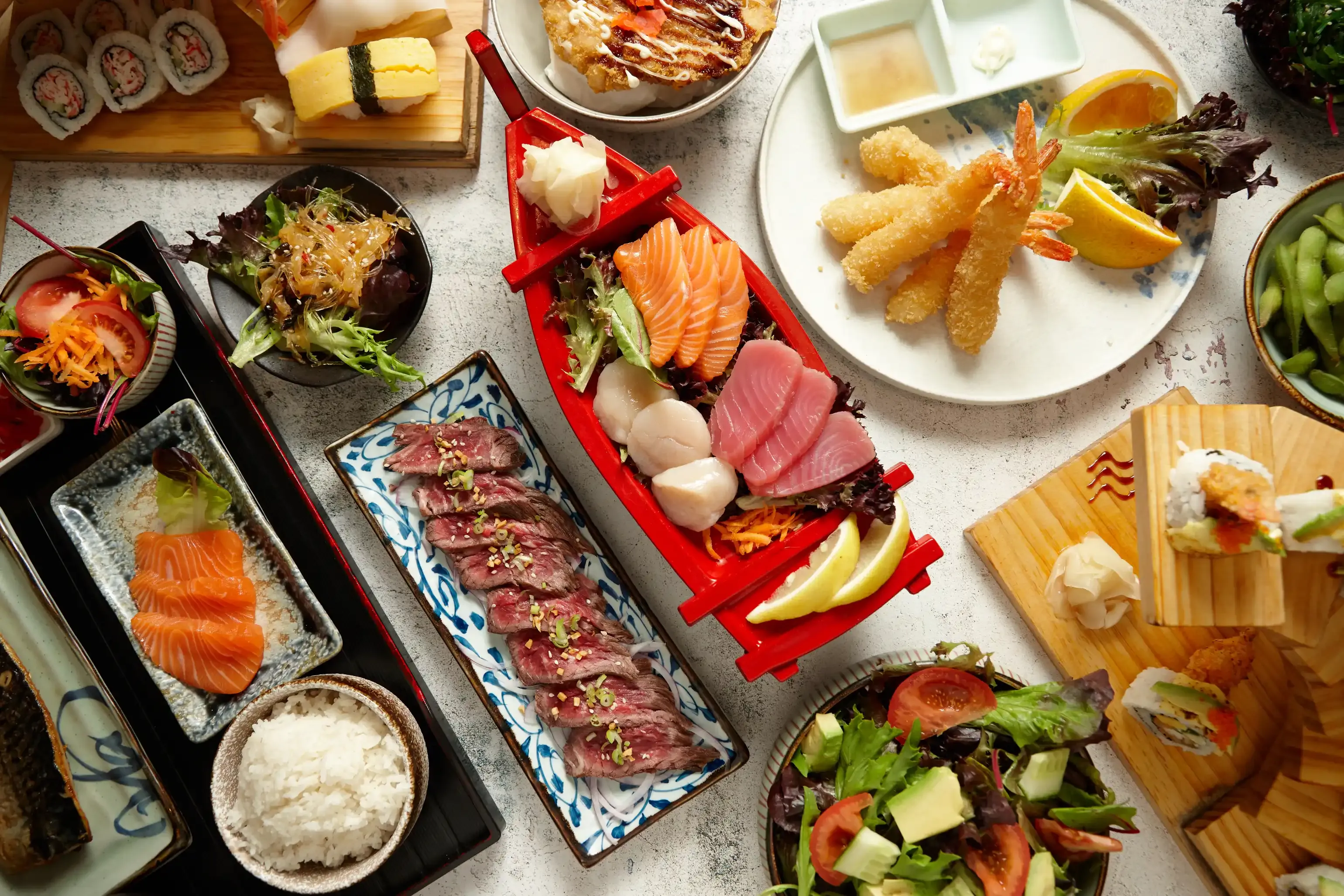
Japanese cuisine has become popular around the world, and yet many of the words that make up the foundation of Japanese food remain surprisingly difficult to translate.
Restaurants will regularly describe yakitori (焼き鳥) as “grilled chicken skewers”, while recipes may reference ingredients such as dashi (だし) with little explanation beyond the name itself. Although these translations are not wrong, they often communicate far less than the original Japanese term implies.
Part of the challenge is that many Japanese food and cuisine terms carry meanings that extend beyond ingredients. Words such as karaage (唐揚げ), washoku (和食) and ichiju sansai (一汁三菜) can reflect preparation methods, presentation, seasonality and broader culinary philosophies that do not map neatly onto a direct English equivalent. Even internationally recognised terms like sushi (寿司) and umami (うま味) have evolved as they entered global vocabulary, sometimes taking on meanings that differ from their original usage in Japan.
For translators and localisation specialists, this creates a challenge that goes beyond literal translation. Whether working on restaurant menus, Japanese cookbooks or food journalism, the task is often to communicate context and cultural meaning as clearly as the food itself.
The Complexity of Japanese Food Terms
Japanese Food as a Philosophy
Much of the terminology surrounding Japanese cuisine carries cultural ideas that are difficult to preserve in translation. One example is washoku, a term often translated simply as “Japanese cuisine”. Although this translation isn't wrong, technically, the phrase carries much broader associations in Japan, reflecting an approach to food that emphasises balance, seasonality and harmony with nature.
This cultural significance extends beyond the word itself. In 2013, UNESCO added washoku to its Intangible Cultural Heritage list in recognition of the traditional practices, knowledge and social customs associated with Japanese cuisine, particularly the emphasis on respecting nature and using seasonal ingredients. Therefore, simply translating washoku as “Japanese food” risks reducing an entire cultural philosophy to a mere category of cuisine.
A similar issue appears with ichiju sansai, which translates literally as “one soup, three sides”. Although the phrase describes a traditional meal structure, it also reflects ideas around nutrition, simplicity and balanced meals that are not immediately obvious from the direct translation alone.
Even widely recognised terms such as umami demonstrate how cultural meaning can shift across languages. Although often described simply as a “savoury” taste, the term carries broader culinary and scientific associations within Japanese cuisine that are difficult to condense into a simple English explanation.
Beyond Ingredients
The same complexity also appears in terms that describe cooking methods and preparation techniques. Many of the words associated with Japanese cuisine communicate information about texture, process and expectation simultaneously. So, while a direct English translation may appear fundamentally accurate, it may fail to convey important details.
For example, karaage is often translated as “fried chicken”. In practice, however, karaage refers to a specific cooking method involving marinated meat or fish coated lightly in starch before frying, creating a distinctive flavour and texture. Translating the term too broadly risks losing the detail that differentiates it from other fried dishes.
Even smaller linguistic elements can create challenges. The suffix yaki (焼き), for example, broadly relates to cooking with direct heat and appears in dishes such as okonomiyaki (お好み焼き), teriyaki (テリヤキ) and takoyaki (蛸焼). Depending on the context, it may imply grilling, roasting, pan-frying or searing, meaning there is rarely a single English substitute that works consistently across every dish.
For localisation specialists, this highlights an important distinction between translating ingredients and translating culinary context. In many cases, Japanese food terminology communicates technique, texture and expectation simultaneously, concepts that are often difficult to condense into a short English description.
When Borrowed Words Change Meaning
As Japanese cuisine has become more internationally recognised, some food-related terms have gradually taken on broader or altered meanings outside of Japan. In some cases, this increased familiarity can make translation even more complicated, particularly when audiences already associate a word with a concept that's slightly different to its original meaning.
One example is sushi, which has become widely used as a catch-all term for Japanese cuisine in many Western countries. In practice, however, sushi refers specifically to dishes prepared with vinegared rice, rather than raw fish alone. International interpretations of the word now encompass a huge range of dishes, ingredients and presentation styles that may differ significantly from traditional Japanese usage.
The same process can affect other borrowed terms. Words such as bento (お弁当) and teriyaki are often adapted to suit local expectations, marketing language or food trends as they enter new markets. Over time, the translated or localised version of a word can become more familiar to international audiences than the original meaning itself.
This creates a complex challenge for translators. In some contexts, preserving the original Japanese term may help retain cultural specificity, while in others, audiences may already associate the word with a different set of expectations. As Japanese food terminology continues to spread globally, localisation increasingly involves balancing authenticity, clarity and the target market's familiarity.
Translating Context, Not Just Words
For translators and localisation specialists, these examples highlight an important reality: translating Japanese food and cuisine terms is rarely just about finding the closest dictionary equivalent. The challenge is often to communicate the context surrounding the food as clearly as the food itself.
Different types of content also require different localisation approaches. A restaurant menu may prioritise brevity and readability, while Japanese cookbooks are more likely to explain ingredients, methods of preparation and cultural references. Food journalism, meanwhile, may choose to preserve certain Japanese terms entirely to retain authenticity or atmosphere.
This is why many localisation decisions involve balancing clarity with cultural specificity. In some cases, preserving the original Japanese term alongside a short explanation can communicate more meaning than replacing it with a simplified English equivalent. Describing dashi, for example, as “a light stock made from kombu and bonito flakes” provides readers with far more context than translation alone.
It is also a reminder that Japanese language and culture often contain layers of meaning that extend far beyond the surface definition of a word or cultural tradition. Similar nuances can be found in areas ranging from Japanese wordplay and goroawase (語呂合わせ) to the translation of manga and anime dialogue, where tone, context and expectation and understanding all shape how meaning is understood.
For translators and localisation specialists, this kind of cultural knowledge is essential. Understanding Japanese terminology often requires far more than direct linguistic equivalence. It also depends on recognising the social context, traditions and cultural associations that give words their meaning in the first place.
As the popularity of Japanese cuisine continues to grow, people outside of Japan are becoming more comfortable encountering unfamiliar culinary terminology. Therefore, it’s important to remember that effective localisation isn’t necessarily about removing cultural specificity altogether, but rather helping readers engage with it more naturally and confidently.
The next time you’re reading a Japanese menu, a seemingly simple term may be communicating far more than what eventually arrives on the plate. It could also be describing how your dish was prepared, cooked or an entire philosophy surrounding food!
Categories
- Export to Japan
- Japanese Creative Writing
- Japanese Translation Articles
- Translation Expertise