Oct 28, 2026•4 min read•
Onsen in Japan: A Guide to Hot Springs, Culture and Etiquette
Explore Japan’s onsen culture, from hot-spring history and bathing etiquette to renowned destinations and what to expect on your first visit.
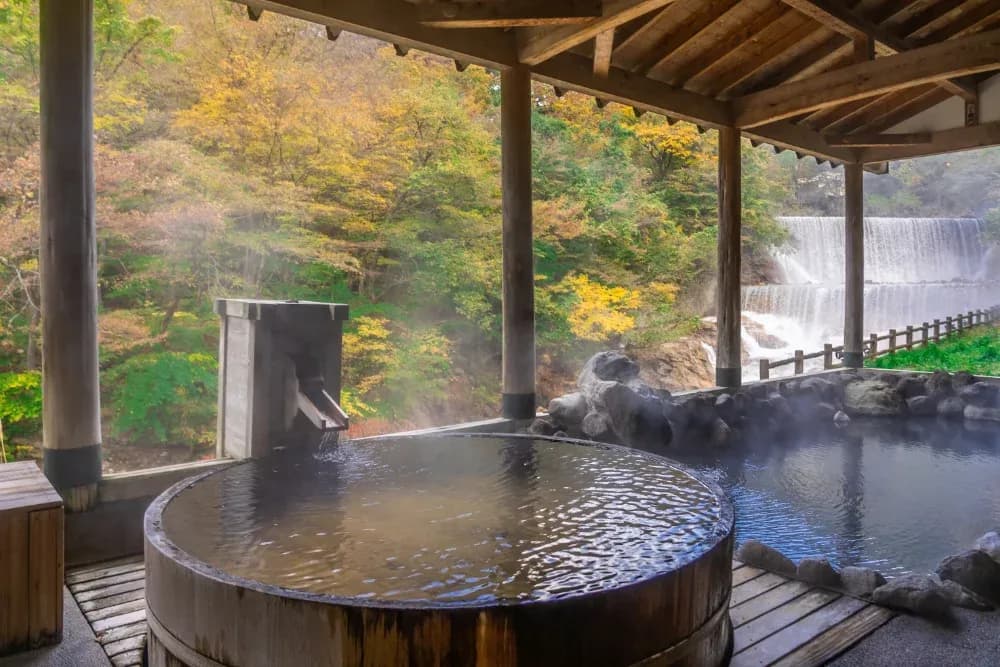
Across Japan, people travel to hot springs to soak in warm, mineral-rich waters, often surrounded by mountains, forests or snow-covered landscapes. Known as onsen (温泉), these natural hot springs have shaped destinations where bathing is as much a reason to travel as the surrounding sights.
Understanding the customs is part of preparing for a visit, but there’s more to onsen than bathing etiquette. Their history offers an insight into the relationship between Japan’s natural landscape and its traditions of rest.
For first-time visitors, a little history can make bathing more meaningful, while knowing the etiquette can make it easier to relax.
What is an onsen?
From small communal baths to large hotel facilities and traditional Japanese inns, known as ryokan (旅館), Japan’s hot springs come in many shapes and sizes. Some are enclosed in wood or stone, while others open onto gardens, mountains and forests. An outdoor bath is known as a rotenburo (露天風呂), where the surroundings are fundamental to the experience.
Japan’s Hot Springs Act sets strict criteria for the temperature or mineral content of water drawn from underground. The water’s composition varies between springs, giving some a distinctive colour, smell or texture.
A visitor’s experience can vary just as much: a brief stop at a public bath, or a stay at an inn where bathing, meals and rest set the pace of the day.
How onsen became part of Japanese culture
People were visiting Japan’s hot springs long before hotels were built around them. Early historical texts record visits by emperors and members of the imperial household to springs such as Arima and Dōgo. These accounts establish a long history of bathing, although people likely knew and used the springs long before those visits were recorded.
Bathing for rest and recuperation
For many travellers, hot springs offered the hope of relief from illness or injury. The practice of tōji (湯治) involved staying at a spring for an extended period, bathing regularly and resting. A visit could last weeks rather than an afternoon, with accommodation arranged around the needs of those seeking treatment.
These historical associations with healing helped shape Japanese onsen culture. They explain why bathing became a reason to travel and stay in one place, rather than simply a way to wash.
From recuperation to recreation
During the Edo period (1603–1868), onsen travel reached the wider public. Travellers combined bathing with pilgrimages and visits to nearby sights, while guides and rankings helped them choose where to go. Some stayed for a single night, fitting a visit into a longer journey.
Today, visiting an onsen might be a weekend away with family, a stop during a sightseeing trip or a quiet evening after skiing.
Onsen etiquette: What to know before bathing
The most important rule is simple: wash before bathing. Everyone shares the water, so keeping it clean is the bedrock of onsen etiquette. Other conventions may feel unfamiliar to first-time visitors, particularly those around clothing and tattoos.
Before you enter the water
Leave your clothes in the changing area, then wash thoroughly at one of the shower stations. Rinse off all soap and shampoo before moving into the bath, and rinse off your stool or bowl.
Most communal onsen have separate bathing areas for men and women, where people bathe without swimwear. You can take a small towel into the bathing area, but keep it out of the water. Long hair should also be tied up to keep it from dipping into the bath.
Once you are in the bath
Take your time getting into the water and allow yourself to settle. Quiet conversation is allowed, but it’s important to be respectful and not to disturb other people. As such, swimming and splashing are frowned upon, and for privacy, keep phones and cameras away from the bathing area.
When you finish, use your towel to dry off before returning to the changing area.
Tattoos and private bathing
Tattoos remain something of a taboo in many parts of Japan. While some facilities accept tattoos, many require them to be covered or may refuse entry altogether. With that in mind, it’s always worth checking an onsen’s policy before visiting, including whether covers are permitted.
For those who may feel uncomfortable with communal bathing, private baths exist. Some facilities offer baths you can reserve for individual use, while some inns have rooms with their own hot-spring baths.
Japan’s best-known onsen destinations
In some onsen towns, hot-spring water is as much a feature of the streets as the baths. At Kusatsu in Gunma Prefecture, steam rises from the Yubatake (湯畑), or “hot water field”, in the centre of town. Wooden channels carry spring water to nearby baths, and visitors can also soak outdoors at Sainokawara Park.
Kinosaki Onsen, in Hyōgo Prefecture, is known for its public bathhouses and willow-lined river. Staying at a ryokan lets visitors walk between baths, stopping at shops and restaurants along the way. Its public bathhouses also welcome visitors with tattoos.
Further north, Japan’s northernmost island, Hokkaido, offers hot springs amid volcanic valleys, mountains, and lakes. Noboribetsu is renowned for its varied mineral waters and the steaming vents of nearby Jigokudani, or “Hell Valley”.
At Rusutsu in Hokkaido, visitors can combine skiing with a soak in the indoor and outdoor baths at The Westin Rusutsu Resort. It’s one of the many reasons Word Connection will be hosting Strateski Hokkaido 2027 here, giving attendees the chance to experience onsen alongside skiing and discussions with fellow language-industry professionals.
Wherever you choose to bathe, leave enough time to enjoy it. Once you’re washed and comfortably in the water, there is very little you need to do. That may be part of the appeal for anyone whose travels usually involve a full itinerary.
Categories
- Japanese Language and Culture
- Marketing and Japanese Language
- Export to Japan