Jan 07, 2026•6 min read•
Translating the untranslatable: Japanese words without English equivalents
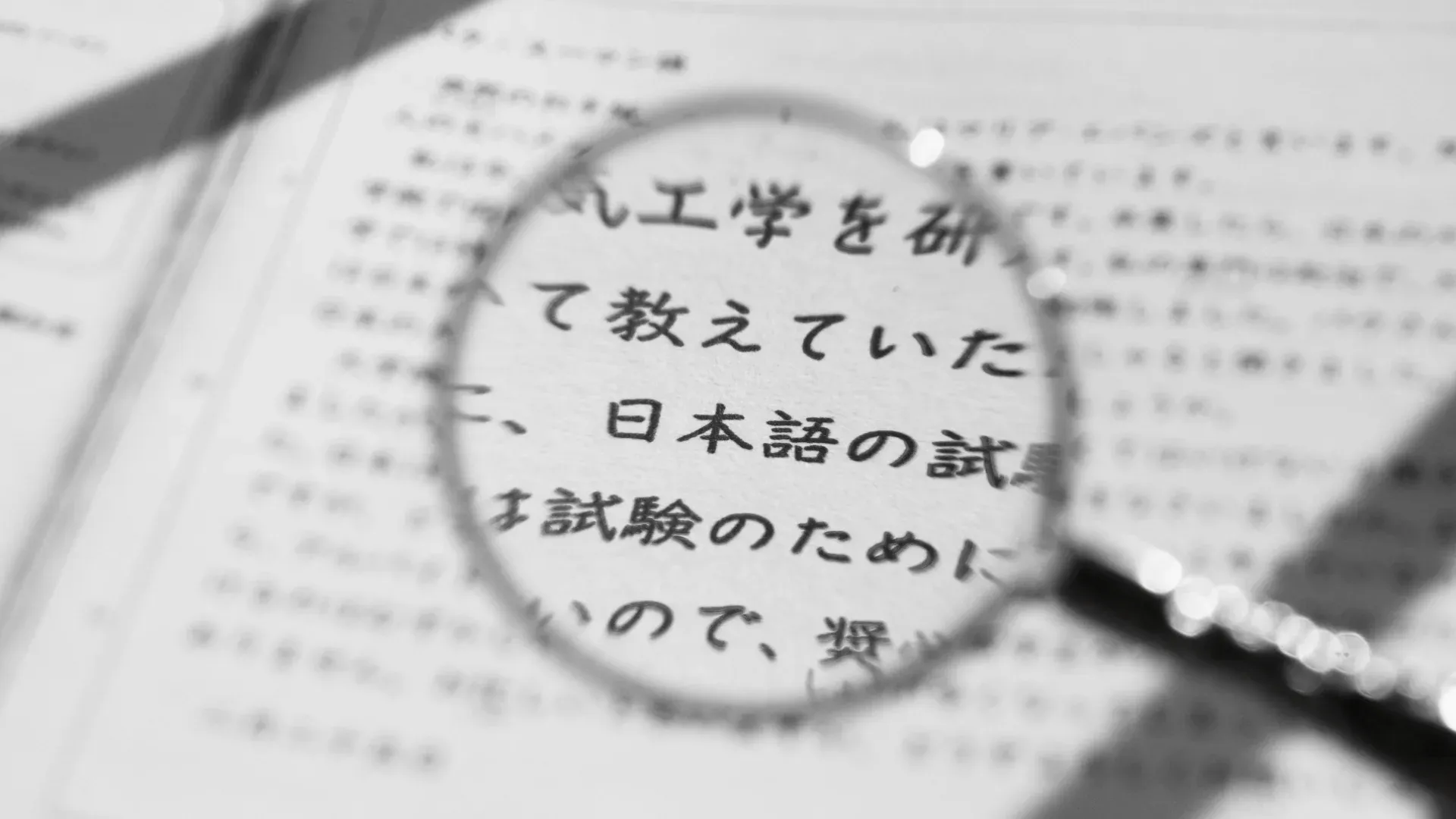
Untranslatable Japanese words often appear on social media. These words are considered untranslatable because English has no direct equivalent for the ideas they express. They capture emotions, philosophies and cultural values that are deeply rooted in Japanese life, from nature and impermanence to perseverance and harmony. In this article, we explore 10 untranslatable Japanese words, their meanings, what they reveal about Japanese culture, and why translation is about so much more than just words.

Untranslatable Japanese words often appear on social media. These words are considered untranslatable because English has no direct equivalent for the ideas they express. They capture emotions, philosophies and cultural values that are deeply rooted in Japanese life, from nature and impermanence to perseverance and harmony. In this article, we explore 10 untranslatable Japanese words, their meanings, what they reveal about Japanese culture, and why translation is about so much more than just words.
Why are some Japanese words untranslatable?
The language we speak is deeply entrenched in culture, it morphs and changes as our need for it grows. Words that were once popular drop out of fashion, new words are coined and even adopted from other cultures to describe new behaviours and items.
Language is essentially how different people wrap up and convey meaning, so it stands to reason that different cultures create different language concepts. In the same way that some Arctic communities have many words for types of snow, while English has just one, the Japanese language has several concepts that have no direct equivalent in English.
10 untranslatable Japanese words (and what they reveal about Japanese culture)
1. Komorebi - 木漏れ日
Possibly one of the most beautiful untranslatable Japanese words, Komorebi is a simple way of describing the sunlight as it’s filtered softly through the trees. It is made up of the Japanese symbols for tree (木), leak (漏) and sun (日), but it evokes so much more; Komorebi describes the relationship between light and shadow, humans and nature.
2. Ikigai - 生きがい
First popularised in the 1960s by psychiatrist Mieko Kamiya, Ikigai builds upon the cultural ideals of hard work and social responsibility, it has been likened to happiness, but for the future, to allow a person to endure their current situation. Ikigai is made up of the characters iki (生) meaning life and gai meaning worth and is often translated into English as “reason for being”. Popular business models draw Ikigai as the intersection where ‘what you're good at’, ‘what you love doing’, ‘what the world needs’ and ‘what you can be paid for’ come together.
3. Shoganai - 仕様がない
Shoganai is considered an untranslatable word because in Japanese, it has so many different possible meanings in different scenarios. It embodies the spirit of patience and perseverance and signifies the acceptance of a situation that is beyond our control. It’s a bit like saying ‘that’s life’ but without the negative connotations. It comes from the word shikata ga nai – ‘there is no way’ and signifies quiet acceptance.
4. Yoroshiku - よろしく
Another untranslatable Japanese word with multiple possible translations, Yoroshiku reflects the Japanese value of respect. It is a term used for politeness and to ensure harmony. It can mean ‘please’ or ‘thank you’ or ‘you’re welcome’, but it signifies something more like, ‘I hope I please you’ or ‘please treat me well’. Often it is translated simply as ‘pleased to meet you’. Its origins lie in the verb ‘to accept’ so actually, people are asking for acceptance.
5. Mottainai - 勿体ない
Mottainai is akin to ‘what a waste’. It is an expression used to express regret over wastefulness, a concept deeply entrenched in Japanese culture along with environmental respect and mindfulness, values inherited from the ancient Shinto religion.
6. Tsundoku - 積ん読
Tsundoku is something many people around the world can relate to. It is the art of buying books and letting them stack up without reading them. Perhaps this is a symbol of the constant compromise between aspirations and the busy-ness of modern life, or a nod to the pursuit of knowledge and enlightenment.
7. Mono no aware - 物の哀れ
Often used to express the wistful feeling of seeing cherry blossoms fall, Mono no aware expresses the impermanence of things. This untranslatable term influences Japanese art, literature and day-to-day life and means something like, ‘the pathos of things’.
8. Yūgen - 幽玄
Yūgen is the profound emotional response to something that is too big to fully understand, like the expanse of the universe and the sense of beauty and wonder we feel at it. The kanji for this untranslatable Japanese word mean ‘deep’ or ‘calm’ and ‘mysterious’ or ‘profound’. Yūgen evokes a beauty that we have no words to describe.
9. Kuchisabishii - 口寂しい
This much-loved untranslatable Japanese word signifies ‘lonely mouth’, and describes the act of eating because you are bored or for something to do. Not to satiate hunger but to fill a different kind of void.
10. Wabi-sabi - 侘び寂び
Last but not least on our untranslatable word list, wabi-sabi means seeing beauty in the imperfection and impermanence of nature. It is about simplicity and things getting better with age. Wabi-sabi encourages us to appreciate the transient nature of life and is a core concept of the Japanese tea ceremony.
How do translators handle untranslatable Japanese words?
While these words are described as untranslatable, translators will tell you that conveying them in another language is exactly what they do. Back in1959, Roman Jakobsen, a Russian-American linguist, wrote that translation is never about perfect sameness, it’s about equivalence and difference. In other words you keep meaning but change the form. There is a gap between two languages but by choosing a different way of expressing things you can create equivalence.
A few years later, in 1964, American linguist, Eugene Nida, published his theory on dynamic and formal equivalence. Formal equivalence means staying close to the source text, so that the reader understands they are reading a translation and can draw their own inferences from it. Dynamic equivalence is the idea that the text takes on the grammar and structures of the target language, so that it has the same effect on the reader as the original text on the original target reader.
We see dynamic equivalence in today’s localisation practices, adapting parts of text to make them more relevant to the reader, and also in transcreation, a portmanteau of translation and creation, often used for slogans, humour, marketing texts and more. Instead of trying to explain an untranslatable word in detail, you create something new that has a similar effect on the reader.
Untranslatable Japanese words offer more than linguistic curiosity, they provide insight into Japanese values, beliefs, and ways of seeing the world. While these words may not have direct English equivalents, translation techniques such as paraphrasing, localisation, and transcreation allow meaning to cross cultural boundaries. Ultimately, exploring untranslatable Japanese words reminds us that language and culture are inseparable.
Categories
- Japanese Business Culture
- Japanese Translation Articles
- Export to Japan