Dec 31, 2025•5 min read•
Goroawase: The art of Japanese wordplay
What is goroawase? Learn how Japanese number wordplay works and why it presents unique challenges for translation and localisation.
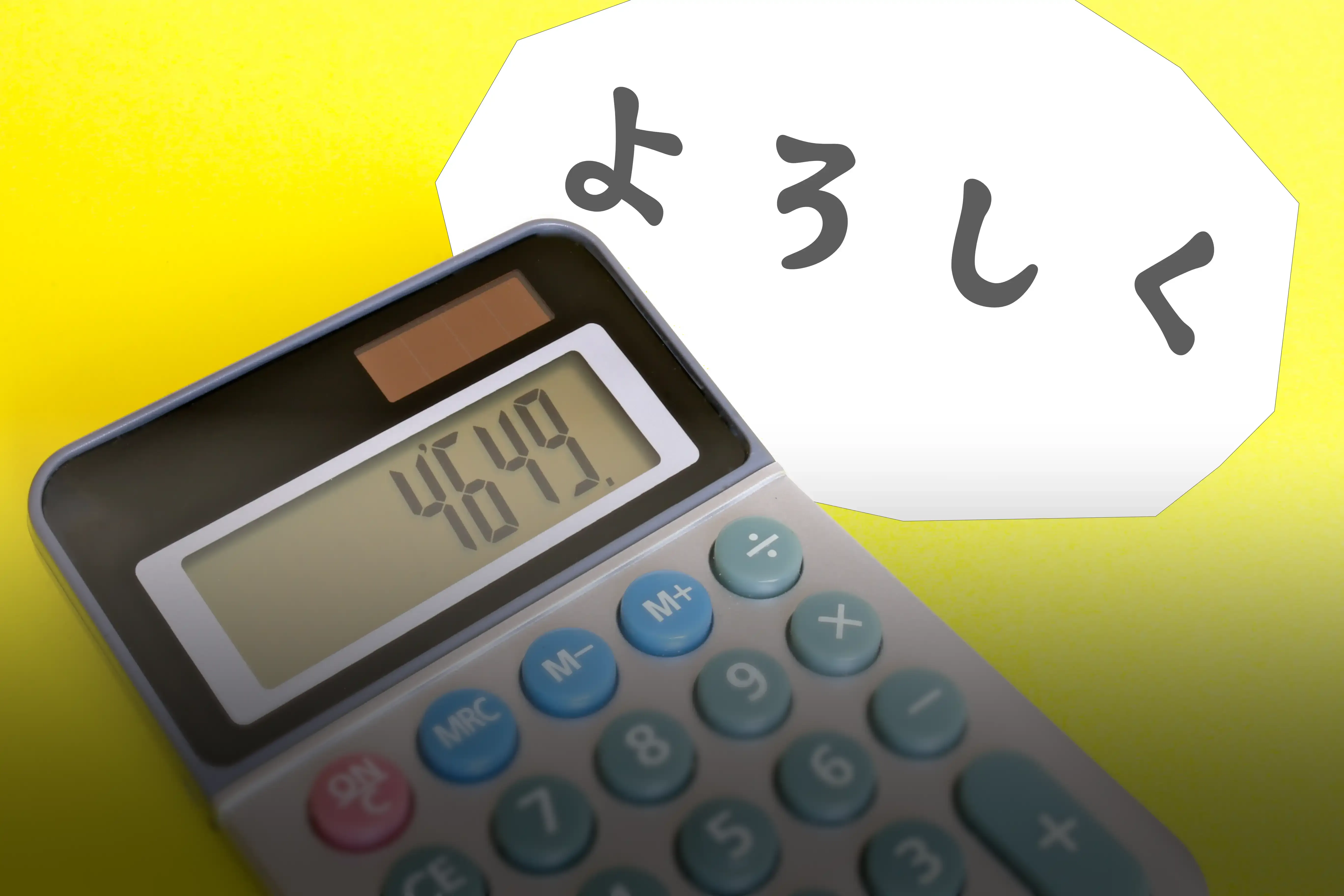
Language is shaped not only by grammar and vocabulary, but by culture, sound and shared understanding. In Japanese, one of the most distinctive examples of this interplay is goroawase (語呂合わせ, lit. ‘phonetic matching’), a form of wordplay that uses the phonetic flexibility of numbers to create meaning, association and memorability. While it may appear playful on the surface, goroawase has a meaningful role in everyday communication, marketing and cultural expression in Japan.
For translators, goroawase can present both opportunities and challenges. Its meaning often relies on sound rather than script, and cultural context rather than explicit explanation, making it difficult (and sometimes impossible) to translate directly. Understanding how goroawase works and why it matters is, therefore, essential for anyone adapting Japanese content for international audiences.
In this article, we explore the linguistic foundations of goroawase, its cultural significance and what it reveals about the limits and possibilities of modern translation and localisation workflows.
Understanding the Japanese number system
To understand goroawase, one must first understand how numbers function in Japanese. Unlike English, where numbers typically have a single, fixed pronunciation, Japanese numbers can be read in multiple ways, depending on context and linguistic origin. This flexibility is what makes number-based wordplay possible.
Japanese number readings generally fall into three categories:
- On’yomi (音読み): Chinese-derived readings of kanji characters, commonly used in dates, times, large numbers and formal contexts
- Kun’yomi (訓読み): Native Japanese pronunciations, often associated with everyday counting and traditional expressions
- In some cases, English-based readings, informal adaptations used in contemporary or creative contexts
As a result, a single number may have more than one accepted pronunciation. For example, the number four can be read as ‘yon’ (よん) or ‘shi’ (し), while nine can be read as ‘kyū’ (きゅう) or ‘ku’ (九). When these alternative readings are combined across longer sequences of digits, they create a wide range of possible sounds — far more than would be possible in English.
Because Japanese places significant emphasis on spoken sound, meaning is not always immediately apparent from the written form alone, which creates fertile ground for phonetic wordplay. Goroawase emerges from this system, using numbers not for their numerical value, but for the sounds they can represent.
What is goroawase?
Rather than relying on spelling or visual similarity, goroawase works through phonetic association, using the multiple ways numbers can be read in Japanese to form recognisable sounds.
At its simplest, goroawase allows numbers to ‘stand in’ for syllables. When arranged creatively, these sounds can form words, phrases or associations that are easy to remember. This makes goroawase particularly effective as a mnemonic device, but it also explains why it appears so frequently in everyday communication in Japan, especially branding and marketing.
Crucially, goroawase is rarely explained when it is used. Its effectiveness depends on shared cultural and linguistic knowledge. An audience is expected to hear the intended meaning rather than have it spelt out.
Goroawase compared with number-based wordplay in English
At a surface level, goroawase may resemble number-based puns in English, such as using ‘4’ to represent ‘for’, or ‘2’ to represent ‘to’ or ‘too’. In informal contexts, English speakers may also encounter numeric shorthand such as ‘B4’ or ‘L8r’, where numbers substitute for similar sounds. However, the similarities are largely superficial. In English, number-based wordplay tends to be limited, informal and visually driven, relying on spelling conventions rather than spoken language.
Meanwhile, goroawase is deeply rooted in the phonetic structure of the Japanese language. Because Japanese numbers have multiple accepted readings, a single digit can represent several possible sounds, allowing far greater flexibility and nuance. As a result, goroawase is not restricted to informal communication; it appears in advertising, product naming, popular culture and even commemorative dates. This includes Maneki Neko Day, an annual celebration that falls on 29 September. This is a clever play on words as ‘9’ (‘ku’) and ‘29’ (‘fuku’) can be read together as “kuru fuku”, which means “come, good fortune”.
So, while English number puns are often optional or stylistic, goroawase frequently carries intentional meaning that contributes to tone, memorability or cultural resonance. Treating it as a casual or disposable element risks overlooking its communicative function entirely.
Why goroawase numbers are difficult to translate
Because they rarely convey explicit meanings, goroawase numbers present a particular challenge for translators. Rather than being contained in the written form of a word or phrase, meaning often emerges through sound, association and shared cultural understanding. When content is removed from that context, the intended message can be difficult to identify, let alone reproduce.
In many cases, goroawase is designed to be recognised instinctively by a Japanese audience. The wordplay is not explained because it isn’t meant to be — its effectiveness depends on familiarity with the language’s phonetic conventions and cultural references. For anyone translating into or out of Japanese, this creates a risk that key nuance is either missed entirely or flattened through literal translation.
The challenge is not simply whether goroawase can be translated, but whether it should be. A direct equivalent may not exist in the target language, and attempting to replicate the wordplay too closely can result in awkward or unclear messaging. In such cases, effective localisation often involves making strategic decisions: adapting the concept, finding a culturally appropriate alternative or prioritising intent over form.
This is where linguistic and cultural expertise becomes critical. Recognising goroawase and understanding its function within a broader message allows translators to preserve meaning even when the original structure cannot be carried across. Without that awareness, there is a risk that content loses memorability, tone or cultural resonance in translation, even if it remains technically accurate.
Goroawase, CAT tools and human expertise
Modern translations rely heavily on CAT tools (Computer-Assisted Translation tools) to improve consistency, efficiency and terminology management. These tools are highly effective at handling structured content, repeated phrases and established terminology — but they are far less reliable when meaning depends on sound, implication and cultural context.
Because goroawase operates at a phonetic and cultural level, it is unlikely to be flagged or interpreted correctly by automated systems alone. A CAT tool may process the surface text accurately while missing the underlying wordplay entirely, particularly where numbers are involved. Without human intervention, this can result in translations that are technically correct but culturally off.
Human linguists play a crucial role in identifying when goroawase is present and deciding how best to handle it within a localisation strategy. This may involve adapting the message to suit the target audience, replacing the wordplay with a functionally equivalent concept or prioritising clarity over direct replication.
It’s a reminder that CAT tools (and other automated translations) are best used as supportive technologies, not substitutes for humans with cultural expertise. When used alongside experienced translators, they form part of a workflow that balances efficiency with the nuanced judgement required for culturally sensitive localisation.
For professionals working with Japanese content, recognising goroawase is not simply a linguistic exercise, but a practical necessity. Effective localisation depends on understanding when meaning can be transferred directly, when it must be adapted and when intent should take precedence over form. As this example shows, combining cultural insight with the considered use of CAT tools remains essential for producing translations that are not only accurate but also culturally appropriate.
Categories
- Japanese Translation Articles
- Translation Expertise
- Japanese Language and Culture
- Export to Japan
- Blog