Jan 14, 2026•4 min read•
Japanese four-kanji idioms (Yojijukugo), their usage and translation challenges
Discover yojijukugo (Japanese 4-kanji idioms), learn their cultural importance, uses in business and how to translate them into English.
Ever had water in a sleeping ear? Or given gold coins to a cat? If you haven’t then perhaps you’ve not spent much time in Japanese society. These phrases are Japanese idioms, and while they might make English speakers feel a bit like a fish out of water, they pop up regularly in Japanese conversations.
Ready to 無我夢中 (Muga Muchū ) or lose yourself in some imagery-rich idioms? Here we share some of our favourite 4-kanji Japanese idioms used in business contexts, we also explain why they’re such an important part of Japanese communication (hint: it’s all about reading the air). As you might expect, Japanese idioms mean so much more than the sum of their words so translating them can be a huge challenge, so we’ll finish with some of the solutions professional translators use to accurately convey these idioms without losing what makes them uniquely Japanese.
What is yojijukugo? Japanese idioms explained
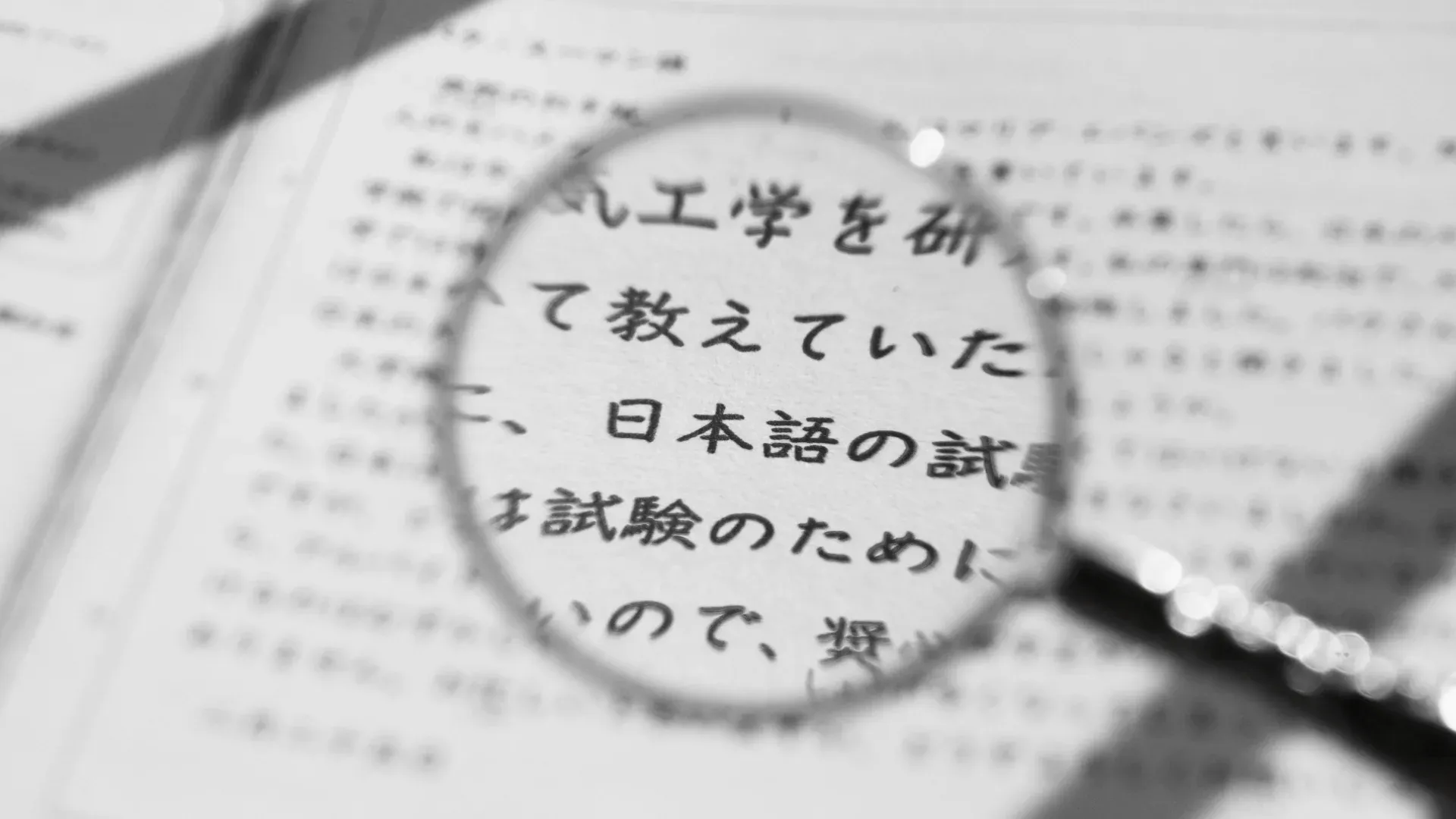
Yojijukugo 四字熟語 is the name for a specific kind of Japanese idiom with four kanji characters. 四字 (yoji) means four letters and 熟語 (jukugo) means idioms. These four kanji Japanese idioms are said to have been imported to Japan from China in ancient times. They can often be traced back to Chinese literature or philosophy and are used to describe behaviours or characteristics, much like English proverbs. The succinct structure allows for rich, symbolic meanings to be expressed in short form.
Why Japanese idioms are culturally significant
Japanese idioms are a key part of the cultural fabric of Japanese society. They are passed down through generations and used to convey important messages about life, relationships or personal development. By translating complicated ideas into just a few simple words, these idioms are woven seamlessly into daily life. They are easy to remember and repeat and they apply to a multitude of situations.
Many Japanese idioms reflect Japan’s respect for nature and others highlight core values such as humility, patience, and mindfulness.
Japanese idioms can also be useful for expressing difficult or awkward concepts. The Japanese communication style is very indirect, often referred to as ‘reading the air’. Using an idiom may soften a lesson or pass on tricky information in a clear yet subtle way.
5 popular Japanese 4-kanji idioms used in business
Idioms are not just for fun, popular Japanese business idioms can extol the virtues resilience, adaptability, efficiency and teamwork. Here are five of our favourites.
一期一会 - Ichi-go ichi-e – One time, one meeting
This Japanese idiom is used as part of a Japanese tea ceremony and is rooted in zen Buddhism. Ichi-go ichi-e emphasises that every moment is completely unrepeatable, because even if you got all the same people together in the same room, it won’t replicate that exact moment. It encourages an appreciation of the present and reminds us that time is fleeting.
一心同体 - Isshin Dōtai – One mind, one body
This yojijukugo is used to express teamwork and unity, referring to people who are tightly bound together for a shared purpose, an idea at the heart of Japanese culture. It can also be used to refer to two hearts beating as one, or your closest connections.
傍目八目 - Okame Hachimoku – The onlooker sees 8 moves ahead
Okame Hachimoku stems from the game of Go, this Japanese four kanji idiom is about taking a step back and gaining perspective for clarity or stopping and considering things from a different angle before wading in.
七転八起 - Shichiten Hakki – Fall down 7 times, stand up 8
This Japanese idiom has become popular in the West and is used to express the idea of never giving up or something akin to “When life gives you lemons, make lemonade.”
大器晩成 - Taikibansei – Great talents mature late
Taikibansei can be used to refer to someone who is a late bloomer, but it does not have the negative connotations of this expression in the West. This four-character idiom in Japanese suggests that true greatness comes only after a time of waiting, so late bloomers often have the greatest talent to reveal.
How to translate Japanese idioms accurately
Professional translators use a variety of translation decision-making techniques for translating Japanese idioms. Firstly they will consider the bigger picture, why are they translating this particular idiom and for whom? What is the most important part to convey? Is it the poetry or the rhyme? Are the words themselves enough without further explanation or does the reader need to understand explicitly what the idiom is referring to? If there is a back story, how important is it for the reader to be aware of and understand this?
Once the importance of sound, image and meaning are decided then the translator will consider the context and target reader. Some possible translation solutions are:
- Use the original idiom with a footnote to explain it in detail if needed.
- Opt for a transcreation style approach where the effect is recreated in the target language with less of an emphasis on particular words.
- Localising the idiom by replacing it with an idiom in the target language with similar phrasing or an idiom with similar meaning, according to what’s most important.
- Paraphrasing the idiom or leaving it out entirely, according to relevance.
The translation approach taken for each Japanese idiom will be based largely on context and purpose. In an article like this, you can see we’ve opted to include the original, a brief summary and an explanation. If the idiom were part of an advertising campaign or character limits were in place, a transcreation approach would be more fitting.
Japanese four-kanji idioms, or yojijukugo are a simple tool for conveying a complex message. While idiomatic translation is never simple, a skilled translator will find the most appropriate solution for the text. For those interested in Japanese culture, understanding Japanese idioms opens the door to deeper cultural awareness offering an interesting insight into the wisdom handed down through generations.
Need a little help translating Japanese idioms in your business communications? Get in touch.
Categories
- Japanese Language and Culture
- Export to Japan
- Blog