Aug 26, 2026•6 min read•
AI Translation & Legal Documents: Where Human Expertise Remains Essential
Explore the limits of AI in legal translation, the risks posed to important documents, and why human expertise is essential.
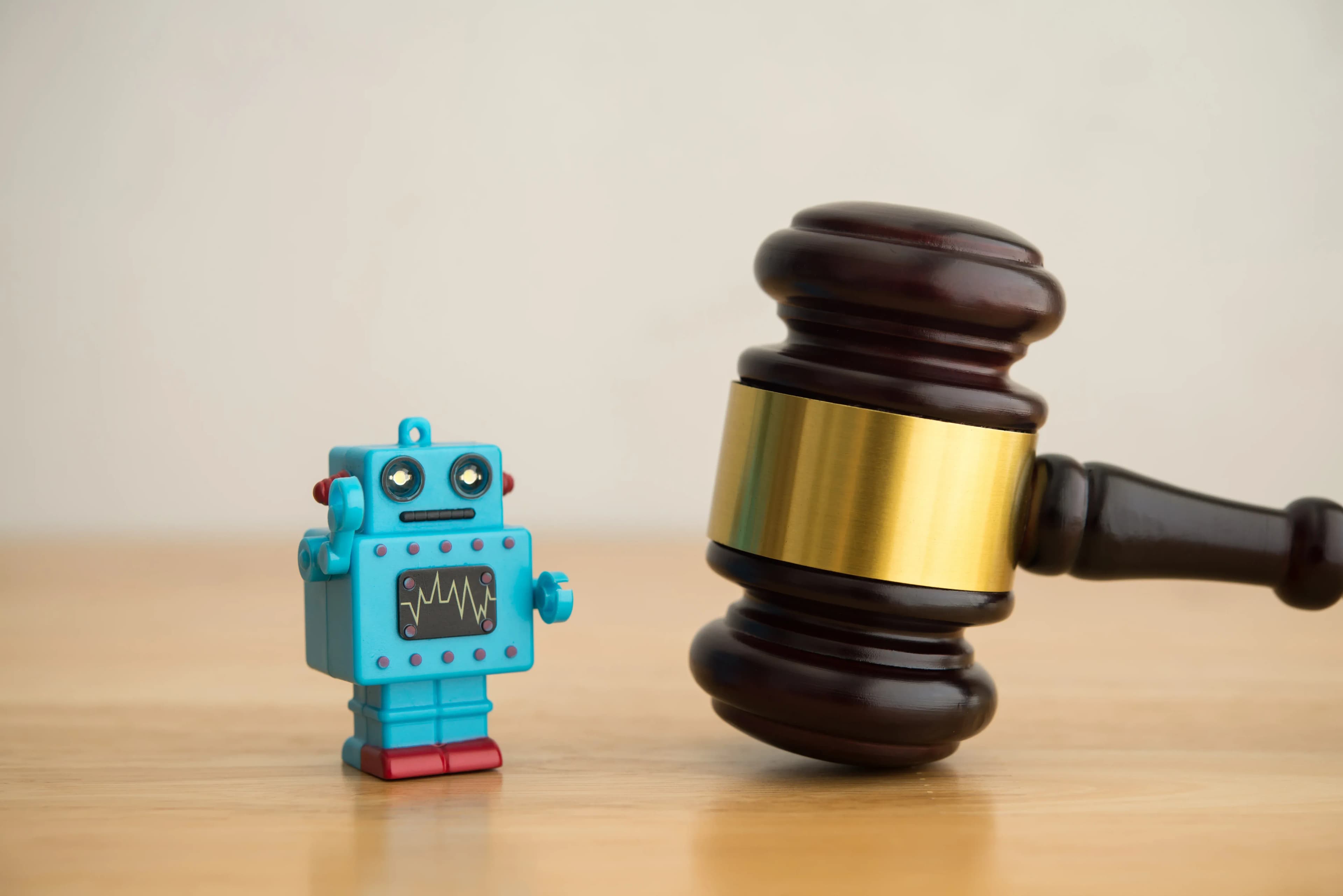
Artificial intelligence can translate a contract in seconds. The result may be fluent, convincing and indistinguishable from a professional translation. But would you sign it?
When it comes to legal documents, a translation that looks right doesn’t necessarily mean it can be relied on. A small change in terminology, an incorrectly interpreted clause or even an omitted qualification can alter the meaning of an agreement. In some cases, this could even affect the rights and obligations of the people or businesses involved.
That doesn’t mean there’s no place for AI in legal translation. But as the consequences of an error increase, so too does the need for human judgement, verification and accountability.
AI Already Has a Place in Legal Translation
AI can be very useful for legal translations. It can process large volumes of text quickly, helping legal teams review foreign-language contracts, correspondence, filings and other documents without having to translate each one manually.
This can be especially valuable during document discovery or an initial review. If a legal team needs to identify which of hundreds or thousands of documents contain relevant information, an AI-generated translation may provide sufficient understanding to narrow the field before involving a professional translator.
AI can also support routine internal communications and produce first-pass translations for further review. In these scenarios, speed and scale are often the priorities, and AI has already demonstrated considerable value in both.
The important distinction is what happens next. A translation used to understand the general contents of a document carries a very different level of risk from one used to make a legal decision, sign an agreement or satisfy a regulatory requirement.
Why Legal Translation Is Particularly Difficult to Automate
Legal translation leaves little room for approximation, and requires more than just finding equivalent words in other languages. Instead, translators must understand what those words mean within a particular document, legal system and jurisdiction.
Legal terms don’t always have direct equivalents
Every legal system has developed its own concepts, institutions and terminology. As a result, a term that’s relatively straightforward in one language may have no exact equivalent in another.
This is particularly important when translating between languages such as Japanese and English, where the underlying legal traditions and conventions can differ considerably. Choosing the closest dictionary equivalent may produce perfectly natural language while misrepresenting the original legal concept.
Therefore, a specialist translator must consider not only what a term says, but what it means within the relevant legal system — and whether that meaning can be expressed directly in the target language.
Context can change the meaning
Modern AI translation systems are considerably better at interpreting context than earlier machine translation tools. But context in a legal document can extend beyond the surrounding sentence.
The intended meaning of a term may depend on a definition established pages earlier, its relationship with another clause, the type of document, or the jurisdiction in which it will be used. The same word can even carry an ordinary meaning in one context and a specific legal meaning in another.
For a human legal translator, resolving such ambiguities requires interpretation and research. An AI system can predict a highly plausible translation, but plausibility isn’t the same as legally appropriate.
Small linguistic choices can have large consequences
In legal documents, even the smallest of details can affect how a provision is interpreted. A change to a modal verb, qualification or negation can alter an obligation, while punctuation and sentence structure can change which parts of a clause apply to which parties or circumstances.
Consistency matters too. Defined terms are generally chosen for a reason, and translating the same term differently elsewhere in a document can introduce ambiguity that wasn’t present in the original.
AI errors can be difficult to spot
Poor translations aren’t always obvious. In fact, one of the risks of modern AI translation is precisely how convincing the output can be. Generative AI can produce fluent, grammatically correct language even when they have misinterpreted the source. They may also resolve ambiguity, omit a qualification or introduce an apparently helpful clarification that changes the original meaning.
For everyday translation, an error of this kind may be relatively inconsequential. In a contract, court filing or regulatory document, it may materially affect how the text is understood. This creates a particular challenge for legal translation: the person reviewing an AI-generated translation needs enough linguistic and legal expertise to recognise when something is off — even when it sounds right.
Legal Translation: More Than Linguistic Accuracy
Accuracy is fundamental to legal translation, but it isn’t the only consideration. Businesses also need to know how a translation was produced, how sensitive information was handled and who is responsible for the finished document.
Confidentiality and data protection matter
Legal documents routinely contain confidential business information and personal data. Uploading them to an AI translation platform can therefore raise additional questions about how that information is processed, stored and potentially used.
This doesn’t mean AI translations are inherently insecure. However, businesses need to understand the data-handling practices of any tool or provider they use, particularly when documents contain personal data that may be easy to overlook.
Someone needs to stand behind the translation
Perhaps the clearest difference emerges when something goes wrong. A professional legal translator can research an ambiguous term, explain why a particular translation was chosen and flag wording that cannot be translated with certainty. Their work can also be reviewed as part of an established quality-assurance process.
An AI system can produce a translation, but it cannot take professional responsibility for the decisions behind it. And for documents requiring certified or notarised translation, accuracy alone may not be enough. The translation may also need to meet specific formal requirements before the relevant authority will accept it.
What Human Legal Translators Bring to the Process
The value of a professional legal translator isn’t simply their ability to produce an accurate translation, but their judgement. Specialists recognise when a seemingly straightforward term carries legal weight, research how a concept operates within the relevant jurisdiction, and identify ambiguities that require clarification. They can also maintain terminology across related documents and adapt a translation to its intended purpose and audience.
Just as importantly, professional translation involves quality assurance. Decisions can be checked, terminology verified and uncertain wording flagged for further review.
While Computer-Assisted Translation (CAT) tools, terminology databases and translation memories have long helped professional translators work more efficiently and consistently, they’re better suited to support human judgement rather than replace it.
For high-stakes legal documents, that combination of linguistic expertise, legal awareness and professional oversight remains difficult to substitute.
The Best Approach to AI Legal Translation
For contracts, regulatory materials and other important documents, linguistic fluency alone isn’t enough. Legal translation requires careful judgement, verification and professional accountability.
Businesses also need to consider how AI translation fits with wider requirements around data protection, transparency and evolving regulations, such as the EU AI Act.
However, AI and human translators don’t have to compete. The right technology can improve efficiency, while experienced legal translators provide the expertise and oversight needed for high-stakes documents.
If your business needs reliable Japanese–English legal translation, Word Connection combines specialist language expertise with rigorous quality assurance. Contact our team to discuss your project and how we can support your legal translation needs.
Categories
- Artificial Intelligence and Machine Translation
- Translation and Localisation
- Translation Expertise